Navigating the Candidate Avalanche
Hiring isn’t just harder, it’s overwhelming. Recruiters are staring at massive applicant pools, yet top talent seems harder to find than ever. What was once a manageable process has transformed into a challenge of volume without…

Director, Marketing
Hiring isn’t just harder, it’s overwhelming. Recruiters are staring at massive applicant pools, yet top talent seems harder to find than ever. What was once a manageable process has transformed into a challenge of volume without clarity. This surge in applications, what we call the Candidate Avalanche, is straining recruiting teams, HR leaders, and executives alike.
Applications for entry-level, hourly, and frontline roles have skyrocketed in recent years, sometimes tripling in volume. But quantity isn’t the only issue. Generative AI enables candidates to apply all at once, tailor resumes automatically, and even exaggerate or misrepresent their skills. Recruiters are now wading through pipelines of similar-looking applications, trying to spot exceptional talent while mitigating fraud and misrepresentation.
The Impact Across the Organization
The Candidate Avalanche affects more than just Talent Acquisition teams. Its ripple effects are felt across HR leadership and the executive suite:
- Recruiters are spending more time on repetitive screening and scheduling tasks, leaving less room to engage with top candidates.
- HR leaders struggle to align talent pipelines with workforce planning and strategic goals, as high-volume, low-differentiation applications obscure real gaps and needs.
- Executives face potential bottlenecks that threaten operational efficiency, innovation, and the company’s employer brand.
The consequences are clear: slower time-to-fill, rising costs, and missed opportunities to secure the best talent before competitors do.
So how can organizations escape the avalanche and regain control? The answer is smarter technology built specifically for the realities of high-volume hiring. That’s where Personegy comes in.

Personegy: Designed for Today’s Hiring Challenges
Personegy is NXTThing RPO’sAI-powered hiring platform designed to solve the exact challenges created by the Candidate Avalanche. Unlike generic HR systems or overhyped AI tools, Personegy was built by recruiting experts with decades of experience in high-volume, high-turnover industries. It’s purpose-built to help employers in retail, manufacturing, hospitality, healthcare, insurance services, and more hire frontline and hourly talent at scale.
Whether you need to fill hundreds of warehouse positions in days, staff seasonal surges during the holidays, or keep up with ongoing churn in customer service, Personegy makes the process faster, simpler, and fairer.
How Personegy Solves the Avalanche
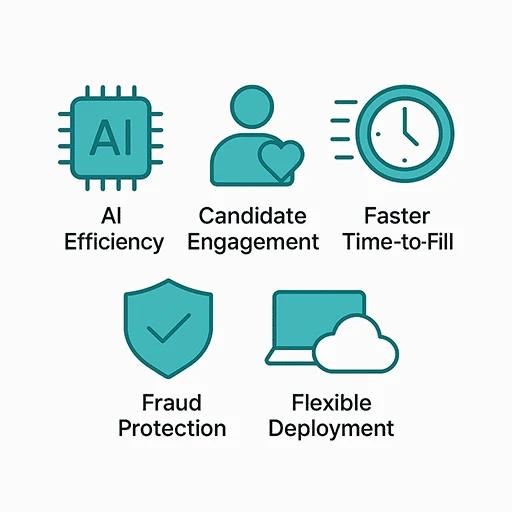
1. AI-Powered Efficiency
Personegy eliminates the repetitive, time-draining tasks that bury recruiters during high-volume seasons. Screening, scheduling, and candidate communication are automated, freeing recruiters to focus on strategy, relationship-building, and winning top candidates.
2. Smart Candidate Engagement
High-volume pipelines often mean high candidate drop-off. Personegy keeps applicants engaged with automated text and email touchpoints, ensuring they feel supported throughout the process. The result? Less ghosting, fewer abandoned applications, and a stronger candidate experience.
3. Faster Time-to-Fill
In industries where roles can sit open for weeks, Personegy reduces time-to-fill to days—or even hours. That speed helps organizations stay ahead of competitors for talent, keep operations running smoothly, and reduce revenue loss tied to understaffing.
4. Fraud Protection and Compliance
Personegy’s Universal Passport helps confirm candidate identities and streamline compliance requirements, so employers can protect against fraud while also creating a seamless application process.
5. Flexible and Scalable Deployment
Personegy can run as a stand-alone solution or bolt onto your existing ATS and HR systems. It flexes to handle enterprise growth, seasonal surges, or cyclical hiring patterns without requiring a heavy IT lift.
The Results That Matter
Personegy isn’t just another recruiting platform. It delivers measurable outcomes that directly address the pain points caused by the Candidate Avalanche:
- Shrink time-to-fill from weeks to days – keeping your business fully staffed and competitive.
- Cut cost-per-hire – by automating manual tasks and eliminating inefficiencies.
- Reduce turnover – with smarter matching and better candidate engagement that supports long-term workforce stability.
- Improve candidate experience – by offering a simple, fair, mobile-first application process designed for today’s workforce.
- Deliver strategic visibility – with real-time analytics that give HR leaders the clarity they need to align talent strategy with business goals.
Why Personegy is Different
The hiring landscape has been flooded with “AI recruiting” tools that promise transformation but fail to deliver practical results. Personegy stands apart because it was designed with recruiters at the center.
- Purpose-built for frontline and hourly roles where turnover is high and speed is essential.
- Faster to implement and easier to use than legacy HR suites that require months of onboarding.
- Backed by RPO expertise, ensuring the technology is grounded in decades of hands-on recruiting experience.
From Chaos to Clarity
The Candidate Avalanche is real, and it isn’t going away. But employers don’t have to drown in it. With Personegy, organizations gain the tools to cut through the noise, surface the right talent, and deliver a better experience for candidates and recruiters alike.
While others struggle with volume, conformity, and risk, Personegy gives you the clarity and speed to hire with confidence. In a world of too many applications and too little time, Personegy ensures you’re not just hiring fast, you’re hiring right.
See how Personegy helps organizations handle the candidate avalanche
Book a Demo