7 Methods for How to Prevent Candidate Fraud in Hiring

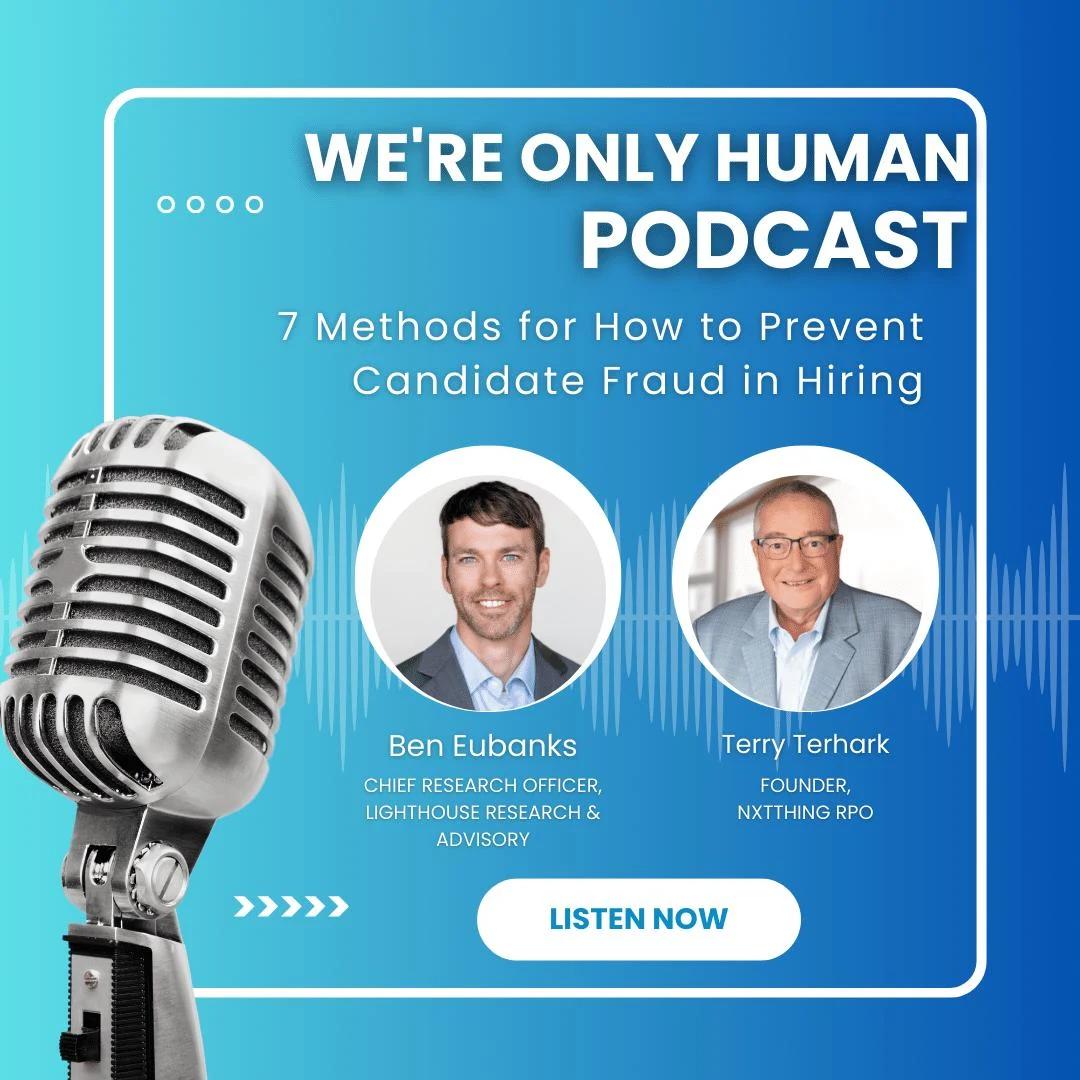
If you are wondering how AI is changing candidate fraud and what recruiters can do about it, this episode breaks it down in practical terms. In this conversation, Terry Terhark, CEO at NXTThing RPO, shares what he is seeing firsthand across enterprise recruiting teams. You will learn what candidate fraud really looks like today, how AI tools are helping applicants misrepresent skills and identity, and what talent acquisition teams can do to protect their hiring process without overreacting. The discussion includes real-world examples of fake resumes, AI-assisted interviews, dual employment, falsified references, and remote hiring risks, along with concrete steps to reduce bad hires and improve hiring integrity.

Key Takeaways

Candidate fraud today is more sophisticated and often powered by AI tools.

Fraud can include fake resumes, fake locations, fake identities, falsified work eligibility, and stand-in interviewees.

AI tools can provide real-time interview answers, making it harder to assess real capability.

Some candidates hold dual full-time remote jobs without disclosure.

The cost of hiring a fraudulent candidate is far higher than candidate ghosting.

Employers must clearly define what counts as acceptable AI use versus cheating.

Requiring ID checks during video interviews can help verify identity.

Asking candidates to share their screen during assessments can expose AI assistance.

More companies are returning to in-person interviews to reduce fraud risk.

Training recruiters and hiring managers to spot red flags is a critical first line of defense.

Connect with Terry on e-mail: terry.terhark@nextthingrpo.com

Connect with Terry on LinkedIn: https://www.linkedin.com/in/terryterhark/

Similar Posts

  • Why Candidates Abandon Your Applications and How to Stop It

    The moment a candidate clicks “Apply,” your hiring funnel is in full motion. Yet for most organizations, that’s where more than half of potential applicants disappear. In fact, some reports show more than 90% of candidates never finish the application process. That’s a massive leak in your recruiting funnel and one you can’t afford. Especially…

  • Modern Recruitment Marketing:Attracting Hourly Talent at Enterprise Scale

    In the world of hourly and frontline hiring, volume and velocity define success. You must attract, convert, and hire thousands of workers quickly, all while competing with other employers for the same limited pool of talent. Traditional approaches to recruitment marketing – post and pray – just don’t cut it anymore. The key differentiator today…

  • 5 Signs Your Recruiting Tech Stack Is Holding You Back

    In today’s hiring war, your tech stack should be an asset not a liability. Yet many RPOs, talent teams, and high-volume hiring organizations find themselves hamstrung by disjointed tools, data silos, manual workarounds, and stale processes that slow everything down. Below are five warning signs that your stack is working against you and how Personegy’s…

  • The Business Stakes of Hiring Delays

    In today’s hyper-competitive talent market, every day a role remains vacant is a strategic risk. According to the Josh Bersin Company, it takes an average of 44 days to fill open positions. In high-demand sectors such as healthcare, logistics, technology, and manufacturing, that timeline can stretch even longer. Meanwhile, Deloitte estimates that a vacant revenue-impacting…

  • Recruitment Tech Buyer’s Playbook

    Cut Through the Noise. Choose Recruiting Tech That Actually Works. 20,000+ HR tools exist today. Most recruiting teams use 6+ platforms. And hiring is still broken. Our free playbook shows you how to build a tech stack that makes hiring faster, smarter, and more human. Is Your Tech Stack Slowing You Down? Your recruiting team…

  • 2025 Recruiter Nation Report

    The 2025 Recruiter Nation Report Is Here 1,200+ talent leaders just revealed what’s really happening inside recruiting today, and the findings show a market reshaping itself in real time.This year’s data uncovers the gap between what teams are trying to fix and where the real bottlenecks still live. What this year’s insights reveal Why it…