







Website settings

Accessibility preferences

Adjust how this website appears and moves. These settings stay on this device.

Movement and effects
Visibility

Is your recruiting tech slowing you down?Free playbook inside

Every applicant scored on your criteria, with the best already on top

Your team decides what predicts a good hire on this role, from tenure and distance to shift availability and a current certification, and weights each one. Every application is read the same way, resume and screening answers together, with the reasoning next to the score.

The system never declines anyone, and candidates above your bar are picking interview times before you open the requisition.

A candidate taking a screening call in her car
Score sheet

Warehouse AssociateColumbus

  • Score 92
  • Forklift: yes
  • Nights: yes
  • Start: 2 weeks

Why this score

  • Forklift certification current
    +25
  • Average job tenure over two years
    +30
  • Lives within 25 miles of the site
    +20
  • Available for second shift
    +17

Teams powered by Personegy

  • Caliber Collision
  • Follett Higher Education
  • Pet Paradise Resorts
  • Celanese
  • Industrial Electric Manufacturing (IEM)
  • Trackforce
  • The Michaels Organization
  • Simpro
  • Emburse

Why scoring is the differentiator

Automated resume screening your legal team can read

Keyword matching tells you a resume mentions forklifts. Weighted criteria tell you who will still be on the floor in six months.

A candidate taking a screening call in her car

Weighted criteria

  • Job tenure
    30 pts
  • Forklift certificationCertification
    25 pts
  • Distance to siteDistance
    20 pts
  • Shift availabilityAvailability
    15 pts
  • Pay range acceptedPay range
    10 pts

Ranked #1

Jessica Taylor

95 / 100

Ranked on what predicts a good hire

Tenure, distance, shift, certification. You set the criteria and the weights, and every application on the requisition gets the same read.

A candidate using her phone while travelling

AI-drafted questions

2 of 7
  • Do you hold a forklift certification?Certification · 25 points
  • Which shifts can you work?Shift availability · 15 points

Screening questions drafted for you

The system reads the job description and intake notes and drafts the questions and their scoring. You edit, reorder and cap the list at seven.

A recruiter reviewing applications at her desk

Assessment

Jessica Taylor

95 / 100

Why this score?

  • Certification meets criteria
  • Shift availability matches

Your decision

Move forward

A score, a reason, never a rejection

Every score shows its reasoning. The system never declines. A recruiter decides who moves, and any override is recorded with a reason.

Your criteria, weighted your way

A score built from what your team says matters

Every vendor says they match. The difference is who writes the criteria, and whether you can read the reason behind each score.

Keyword matching tells you a resume mentions forklifts. Your team knows what predicts a good hire on this role: tenure, distance from the site, shift availability, a certification that is current.

You set the criteria and the weight of each, and every application on the requisition is scored the same way.

Consistent across every application

Every candidate on the requisition is read against the same criteria in the same order, and the criteria are on record for review at any time.

Matching for the candidate too

A candidate who uploads a resume on the career site sees the open roles that fit them best, with a match percentage, before they apply.

Criteria Set by your team · Warehouse Associate
  • Forklift certification

    · Screening question

    25 pts
  • Average job tenure over two years

    · Resume

    30 pts
  • Lives within 25 miles of the site

    · Application

    20 pts
  • Available for second shift

    · Screening question

    15 pts
  • Pay range accepted

    · Screening question

    10 pts
Total

Score for this candidate: 92

Hear from our customers

Applications turn into booked interviews the same day

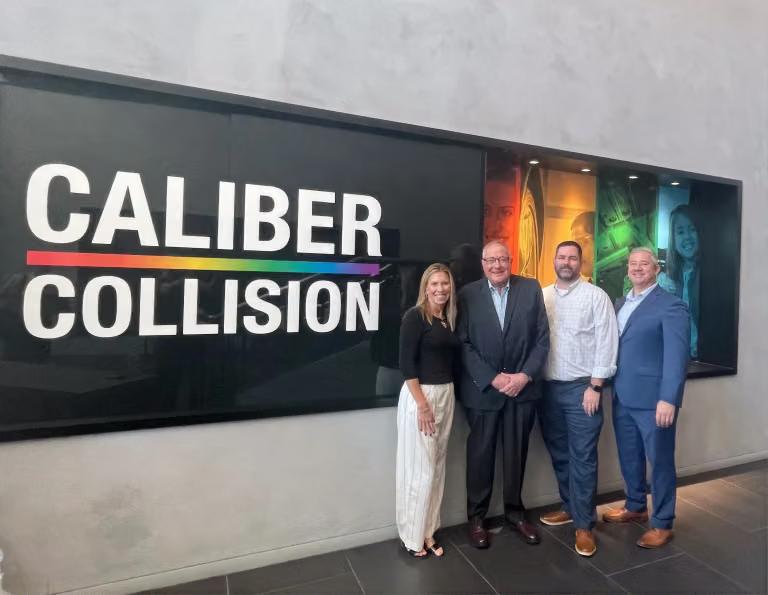
Four people standing beside the Caliber Collision sign

Caliber Collision cut turnover and gave recruiters time back.

With Personegy, Caliber brought entry-level turnover below 45% and saved 15 hours a week through scheduling automation, supporting high-volume hiring across more than 1,800 locations.

Read the case study

Frequently asked questions

What talent leaders ask about scoring before they let it near a requisition.

Is the AI voice interview built into Personegy?

It runs through a voice interview partner that is integrated with Personegy.

Your team switches it on for the roles that need it, and it helps write the questions and a scoring rubric for the first screen. Results land on the same candidate record as the rest of the application.

What is candidate screening software?

Candidate screening software reviews applications against the requirements of a role. Personegy reads the resume and screening answers together, applies the criteria your team weights, and puts the score and reasoning on the candidate record.

What is conversational screening?

Conversational screening collects the information your team needs through a short exchange with the candidate. Your team approves the questions and scoring before the process runs, and a recruiter can take over when a person is needed.

What is automated resume screening?

Automated resume screening reads each application against the same role-specific criteria and ranks the results. It gives recruiters a consistent starting point and a reason for each score; it does not make the hiring decision.

Does a human still make the hiring decision?

Yes. Your team defines the criteria and reviews the results. Personegy does not decline candidates, and a recruiter’s override is recorded with its reason.

How many screening questions should we ask?

Keep the first screen focused on what changes the decision for that role. The platform drafts questions from the job description and intake notes; your team edits, orders and caps the list at seven.

How do you prevent bias in AI screening?

Start with job-relevant criteria, apply them consistently and review the reasoning and outcomes with the people responsible for hiring. Your team controls the weights and can review or override results. No scoring system removes the need for ongoing human oversight.

What happens when a candidate asks for a human review?

A recruiter can review the application, the answers and the reasons behind the score on the same record. The team can then decide the next step and record the reason for an override.

Our plant HR teams read hundreds of applications by hand. Can Personegy help?

The platform reads every application against the criteria for that requisition and presents a ranked list. Plant HR teams can spend their time on candidate conversations and exceptions, with the reasoning available for review.

Every vendor says they have AI matching. How do we tell them apart?

Ask who defines the criteria, how the weights are applied and whether a recruiter can read the reason for a score. Bring a real requisition and compare the results against what your team considers a strong applicant.

We hire a constant variety of roles. How much setup does screening take?

Criteria are set for each role or job family. The platform drafts an initial question set from the job description and intake notes, then your team reviews the questions, weights and threshold before using them.

If we reopen a role, do the screening rules carry over?

Your team should review the saved criteria when reopening a role. Keep the rules that still fit and update any requirements, weights or thresholds that changed before new applications are scored.

Bring a requisition to a call

See your applicants ranked on your own criteria

Bring one requisition and its criteria. We show you the ranked list and the reasoning behind every score.

A recruiter reviewing applications at her desk

Summarize Personegy

Copy this request, then paste it into .

Page unavailable

This page is not available yet.